The New Cellar: Meet the Americans Who Collect Flavor Extracts Like Fine Wine
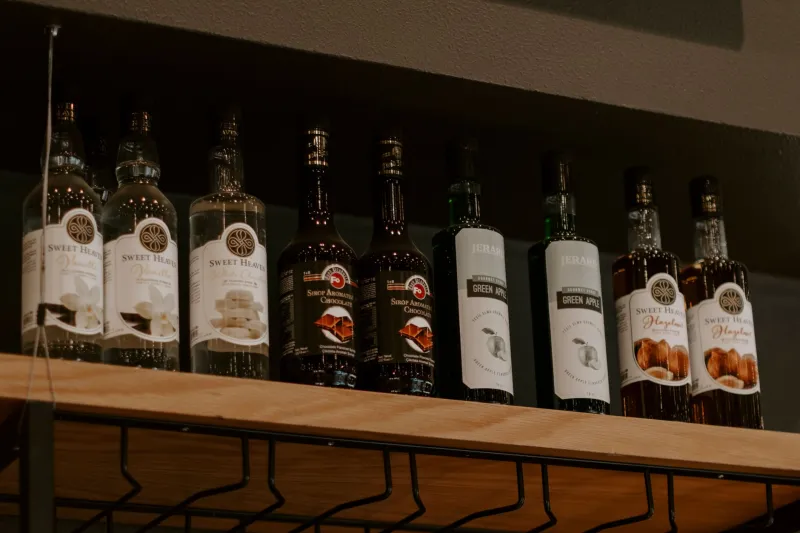
Dana Okafor keeps a spreadsheet. It has columns for origin, producer, batch number, date acquired, date opened, and tasting notes. She updates it every time she adds something new to her collection or cracks a seal on something she's been sitting on. She's not a professional chef. She doesn't work in food. She's a high school librarian in Columbus, Ohio, and she has forty-three bottles of flavor concentrates and extracts that she considers, without a trace of irony, her most prized pantry possessions.
"People understand the wine thing immediately," she says. "You care about where it came from, who made it, what year. You notice the difference between a $12 bottle and a $60 bottle. Extracts are the same. The story is just different."
Dana is part of a small but passionate subculture that's been quietly growing in the United States over the last several years—enthusiasts who approach flavor concentrates and extracts with the same intentionality, vocabulary, and emotional investment that oenophiles bring to wine. They hunt down single-origin vanilla from Madagascar and Tahiti and compare them side by side. They track seasonal releases from small-batch producers. They discuss the merits of different extraction methods on forums and in group chats. And they treat provenance not as a marketing detail but as something genuinely meaningful to the final product in the bottle.
Where This Comes From
The rise of serious extract collecting doesn't happen in a vacuum. It's the downstream effect of two decades of American food culture moving steadily toward transparency, craft, and sourcing specificity. The same impulse that turned coffee from a commodity into a conversation about elevation, processing method, and producer relationships has slowly migrated into other ingredient categories.
Vanilla was probably the entry point for most people. As consumers started learning about the difference between synthetic vanillin and real vanilla extract—and then started learning that not all real vanilla extract is created equal—a natural curiosity emerged. Why does Tahitian vanilla taste so different from Mexican? What does double-fold mean? Why does a small-batch extract from a specialty producer taste so dramatically different from the grocery store bottle?
Once you start asking those questions, you're already on the road to what Dana and people like her have arrived at: treating flavor concentrates as objects of genuine interest, not just functional ingredients.
The Vocabulary of Serious Collectors
Spend any time in the corners of the internet where this community gathers, and you'll notice that the language they use maps almost directly onto wine culture.
There are tasting notes—not in a precious way, but in a genuinely descriptive one. Serious vanilla enthusiasts talk about the floral top notes of Tahitian beans versus the deep, almost tobacco-like richness of high-quality Madagascar vanilla. They describe a well-made citrus oil as having a "clean finish" or a "warm mid-palate." Almond extract gets evaluated for its balance between the bright maraschino-cherry note (which comes from benzaldehyde) and a deeper, more bitter-almond complexity.
There's also a strong emphasis on provenance—the story of where the source ingredient came from and how the concentrate was made. Single-origin designations matter. Small-batch and artisanal are not just marketing words; they're signals that collectors actually investigate. Many enthusiasts in this community correspond directly with producers, asking about harvest years, extraction methods, and whether a batch was made from fresh or dried source material.
And then there's the concept of seasonal and limited releases, which functions in extract culture almost identically to how it does in natural wine. A producer who makes a small batch of black truffle concentrate from a particularly good Italian harvest is going to generate genuine excitement. The bottles will sell out. People will trade them. Someone will post a review.
The Profiles
James Whitfield, a retired electrical engineer in Tucson, Arizona, started collecting after a trip to a spice market in Istanbul about eight years ago. He came home with three small bottles of concentrated rose water and a single-origin saffron extract and found that he couldn't stop thinking about them. "I realized I'd been cooking my whole life with ingredients I didn't actually understand," he says. "These two little bottles opened up a whole line of inquiry."
His collection now spans about sixty products, with a particular focus on Middle Eastern and South Asian flavor concentrates—rose, cardamom, saffron, and a prized bottle of high-grade kewra (screwpine blossom) extract that he's been nursing for three years. "I use it maybe four times a year. It's not precious in a weird way—I actually cook with everything I have. But I use it thoughtfully."
For Simone Reyes, a graphic designer in Austin, the entry point was a subscription box that sent her a single-origin vanilla paste from a small cooperative in Uganda. She'd never thought much about vanilla beyond whether her extract was real or imitation. "That first taste was a revelation," she says. "It tasted like vanilla and also like something else—something fruity and almost wine-like. I needed to understand why."
Three years later, Simone has a dedicated shelf in her kitchen and what she calls a "rotation" of everyday extracts versus special-occasion ones. Her most prized acquisition is a small-batch bourbon vanilla extract that a producer in Vermont made from beans macerated in a locally distilled whiskey. She paid $45 for a four-ounce bottle and doesn't regret it for a second.
What This Says About American Food Culture
The extract collector community is still niche. But what it represents is something broader: an American food culture that's increasingly comfortable applying the language and frameworks of connoisseurship to categories that were never supposed to warrant it.
For a long time, flavor extracts were utilitarian. You grabbed the bottle, you added a teaspoon, you moved on. The idea that the bottle itself could be the point—that its origin story, its producer's philosophy, its sensory specifics—would have seemed eccentric not long ago.
But the same shift happened with olive oil, with vinegar, with hot sauce, with salt. Each of these was once a background ingredient. Each became, for serious food enthusiasts, a subject of genuine study and passion. Concentrates and extracts are simply the next category to undergo that transformation.
Dana puts it simply: "Wine people have a word—terroir—for the way a place shows up in what you taste. I think about that with vanilla all the time. You can taste Madagascar in Madagascar vanilla. You can taste the island in Tahitian. That's not nothing. That's everything, actually."
Her spreadsheet has room for forty more entries. She's already planning what goes in the next column.