What's Really Inside Your Vanilla Extract (And Why Making Your Own Changes Everything)
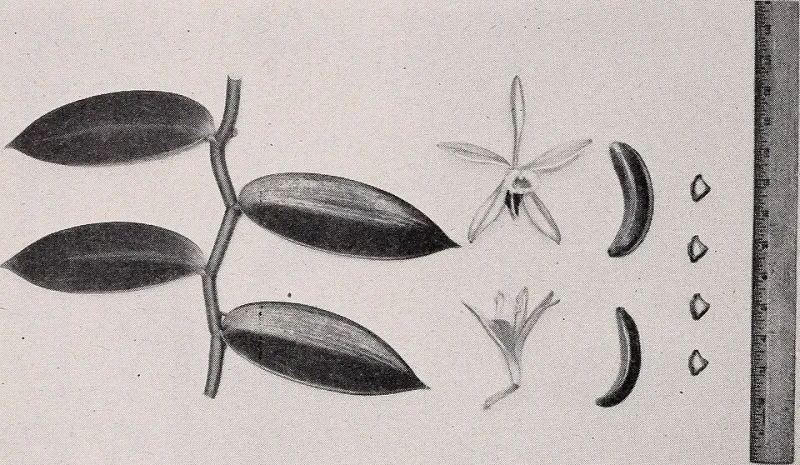
Photo: Internet Archive Book Images, No restrictions, via Wikimedia Commons
Vanilla is one of those ingredients that almost everyone uses but almost nobody really thinks about. It shows up in birthday cakes, morning oatmeal, homemade ice cream, and about a thousand other recipes — quietly doing its job without much fanfare. But here's the thing: the vanilla extract sitting in most American kitchen cabinets is doing a pretty mediocre version of that job. And the reason comes down to chemistry, patience, and a little bit of bean quality.
At Kind Concentrates, we're obsessed with the idea that the most powerful flavors come from thoughtful concentration — not shortcuts. Vanilla is the perfect case study for exactly that philosophy.
The Chemistry of Vanilla Flavor (It's More Complicated Than You Think)
When most people hear "vanilla flavor," they picture one thing: vanillin. That's the primary aromatic compound responsible for vanilla's warm, sweet, slightly floral character. But real vanilla extract — the kind made from actual Vanilla planifolia beans — contains somewhere between 250 and 500 distinct flavor compounds. Vanillin is just the headliner.
Among those supporting players are p-hydroxybenzaldehyde (which adds a faintly medicinal depth), vanillic acid, phenols, and a range of esters and aldehydes that collectively create what food scientists call "vanilla's complexity." This is why a dish made with real extract tastes rounder and more interesting than one made with imitation vanilla, even when you can't quite put your finger on why.
Here's where it gets really interesting: many of these compounds don't exist in the raw bean at all. They're created through enzymatic reactions that happen during curing — the weeks-long process of sweating, drying, and conditioning the harvested beans. It's essentially a controlled fermentation, and it's what transforms a green, nearly flavorless pod into the wrinkled, aromatic bean you buy at a specialty store.
When you make extract at home, you're extending that flavor development story. Alcohol pulls the soluble compounds out of the beans over time, and the longer you let that process run, the deeper and more nuanced your extract becomes.
Why Commercial Vanilla Often Falls Short
Look at the label on most grocery store vanilla extract. The FDA requires that real vanilla extract contain at least 35% alcohol and be made from a minimum of 13.35 ounces of vanilla beans per gallon. That's the floor — not the ceiling — and many commercial producers do the bare minimum to hit those numbers.
The bigger issue is time. Large-scale producers use percolation systems and vacuum extraction to speed up the process, pulling flavor compounds out in days rather than months. The result is an extract that technically checks the regulatory boxes but lacks the depth that comes from slow, patient steeping. Some brands also dilute finished extract with corn syrup or glycerin to stretch their yield further.
Imitation vanilla is a different story entirely. It's almost always made from synthetic vanillin derived from wood pulp byproducts or petrochemical sources. It's cheap, it smells convincingly vanilla-like straight from the bottle, but it completely falls apart in baking — the heat drives off its one-dimensional aroma almost immediately, leaving behind very little actual flavor.
Why Homemade Extract Is Genuinely Superior
When you make your own vanilla extract, you control every variable. You choose the beans (more on that in a second), you choose the alcohol, and most importantly, you choose how long to wait. That last part is where the magic happens.
A homemade extract that's been steeping for six months in a dark cabinet has had time to develop those secondary and tertiary flavor compounds that commercial producers don't have the patience — or business incentive — to cultivate. The alcohol acts as a solvent, drawing out fat-soluble aromatic compounds that water alone could never capture. Over time, the extract also mellows: the sharp alcoholic edge softens, and the vanilla flavor becomes more integrated and complex.
You're also working with better beans. Most commercial producers use lower-grade vanilla (often called "extraction grade") that would never pass muster for retail sale as whole beans. When you source your own Grade A or Grade B beans from a reputable supplier, you're starting with dramatically more aromatic raw material.
Choosing Your Beans and Alcohol
Vanilla beans come primarily from Madagascar (Bourbon vanilla), Mexico, Tahiti, and Indonesia. Each origin has a distinct flavor profile:
- Madagascar/Bourbon: Classic, creamy, sweet — the benchmark most Americans recognize
- Tahitian: Floral, cherry-like, slightly lighter in intensity — beautiful in custards and fruit desserts
- Mexican: Earthy, spicy, with a hint of smoke — incredible in chocolate-forward recipes
- Indonesian: Woody, smoky, bold — a great choice for savory applications
For the alcohol, a neutral spirit works best because it doesn't compete with the vanilla. Vodka (80 proof is ideal) is the classic choice. Bourbon adds a warm, caramel undertone that's lovely for baking. Rum — especially a light white rum — can bring out the sweeter, tropical notes in the beans.
How to Make Your Own Premium Vanilla Extract at Home
This process is simple, but it rewards patience above everything else.
What you'll need:
- 5–6 vanilla beans per cup of alcohol (that's roughly 0.5 oz of beans)
- 1 cup of 80-proof vodka, bourbon, or rum
- A clean glass jar with a tight-fitting lid
- A dark, cool storage spot
Step 1: Prepare the beans. Split each bean lengthwise with a sharp knife, stopping about a half-inch from each end. You want to expose the seeds (called caviar) without cutting the bean completely in half. This dramatically increases the surface area in contact with the alcohol.
Step 2: Combine. Place the split beans in your jar and pour the alcohol over them. Make sure the beans are fully submerged — you can fold them to fit if needed, or cut them into shorter pieces.
Step 3: Seal and store. Close the jar tightly and tuck it somewhere dark and room temperature. A kitchen cabinet away from the stove works perfectly.
Step 4: Shake weekly. Give the jar a gentle shake every week or so to redistribute the compounds and encourage extraction.
Step 5: Wait. Minimum eight weeks to use it. But honestly? Six months is where it really starts singing. A full year produces something genuinely extraordinary.
As you use your extract, you can top it off with more alcohol and add a fresh bean occasionally to keep the concentration strong. Many home cooks maintain a "mother jar" this way for years.
The Patience Dividend
There's a lesson embedded in vanilla extract that applies to a lot of what we believe here at Kind Concentrates: the best flavors aren't rushed. They're built slowly, through careful sourcing and the kind of patient process that commercial production rarely has the luxury of allowing.
When you open a jar of homemade vanilla extract that's been quietly developing in your cabinet for six months, you're not just smelling vanilla. You're smelling the result of chemistry doing its patient, unhurried work — and that's a flavor no shortcut can replicate.