Where Does Your Flavor Actually Come From? The Sourcing Story Behind America's Favorite Concentrates
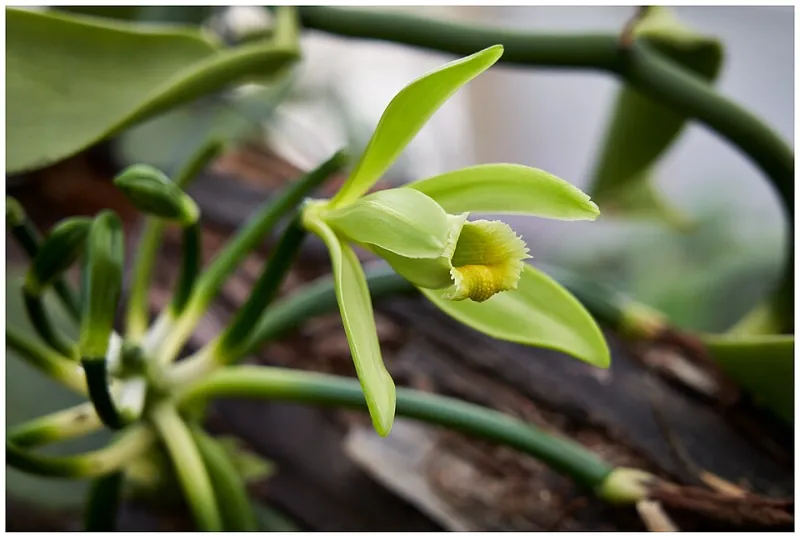
Photo: Geoff McKay from Palmerston North, New Zealand, CC BY 2.0, via Wikimedia Commons
Pick up almost any flavored food product in an American grocery store and flip it over. Somewhere in the ingredient list, you'll probably spot the phrase "natural flavor" or "natural flavoring." It's one of the most common entries on US food labels — and one of the least understood.
For a country that increasingly wants to know where its food comes from, the flavor industry remains surprisingly opaque. But pull back the curtain a little, and what you find is genuinely fascinating: a global sourcing network that draws from orchid farms in Madagascar, almond groves in California, fermentation labs in New Jersey, and yes, occasionally, a petrochemical process that technically still qualifies as "natural" under federal guidelines.
Let's talk about what's actually in your bottle.
The Vanilla Problem (And What It Reveals)
Vanilla is the most instructive case study in flavor sourcing, because most Americans have a working understanding of what vanilla is supposed to be — and most vanilla-flavored products don't contain any actual vanilla bean.
The compound responsible for vanilla's signature flavor is vanillin. True vanilla extract comes from curing and extracting Vanilla planifolia orchid pods, primarily grown in Madagascar, Indonesia, and Mexico. It's labor-intensive, climate-sensitive, and expensive. A single vanilla bean can take up to three years to mature from planting to harvest.
Synthetic vanillin, by contrast, is most commonly derived from guaiacol (a petrochemical compound) or from lignin, a byproduct of the wood pulp industry. Under FDA rules, this version must be labeled "artificial flavor." But here's where it gets interesting: vanillin can also be produced through the microbial fermentation of ferulic acid, which is found in rice bran and other plant sources. That version qualifies as natural flavor under current US regulations — even though no vanilla orchid was involved at any point in the process.
This isn't a loophole so much as a reflection of how the FDA defines "natural": derived from a plant, animal, or microbial source, regardless of how far removed the final compound is from that origin. The European Union takes a stricter view, requiring that a "natural vanilla flavor" actually originate from vanilla plant material.
Botanical Extraction vs. Synthetic Production
There are two broad paths to producing a flavor concentrate, and they represent genuinely different philosophies about what flavor is.
Botanical extraction starts with the source material itself — a fruit, spice, herb, or plant — and uses physical or chemical processes to isolate and concentrate its flavor compounds. Cold pressing, steam distillation, solvent extraction, and CO2 supercritical extraction are all common methods. The result is a complex mixture of dozens or hundreds of compounds that collectively produce the flavor we associate with, say, fresh ginger or ripe peach.
Synthetic (or semi-synthetic) production identifies the key flavor compounds in a target ingredient and produces them independently, either through chemical synthesis or fermentation. The result is often a single compound or a small blend — highly consistent, highly concentrated, and often dramatically cheaper than botanical alternatives.
Neither approach is inherently better. Botanical extracts carry the full complexity of the source ingredient, including trace compounds that contribute depth and authenticity. Synthetic versions offer consistency and scalability that botanical sources simply can't always match — especially for ingredients subject to crop failures, supply chain disruptions, or seasonal variation.
For home cooks and small producers, the practical implication is this: a "pure" botanical extract will often behave differently batch to batch, while a synthetic or semi-synthetic concentrate will hit the same note every time. Knowing which you're working with helps you calibrate expectations.
Lesser-Known Sources That Might Surprise You
Almond flavor is one of the more counterintuitive cases in the concentrate world. The compound behind that distinctive marzipan-like aroma is benzaldehyde — and while almonds do contain it, most commercial almond flavor is actually derived from stone fruit pits, particularly apricot kernels. The kernels contain amygdalin, which breaks down into benzaldehyde during processing. It's still labeled natural, it's still delicious, it just didn't come from an almond.
Butterscotch and caramel flavors often trace back to diacetyl or its alternatives, compounds also found in fermented dairy products like butter and cultured cream. Some are produced through direct dairy fermentation; others are synthesized. The flavor profile is nearly identical.
Citrus flavors present a different challenge. Fresh citrus oil — cold-pressed from lemon, orange, or lime peel — is highly volatile and degrades quickly. Most commercial citrus concentrates use either encapsulated citrus oil (coated in a protective starch or resin to slow oxidation) or distilled citrus terpenes, which are more shelf-stable but slightly less complex than the fresh-pressed original.
What US Regulations Actually Require (And What They Don't)
The FDA's flavor labeling framework, governed largely by 21 CFR Part 101, doesn't require manufacturers to disclose the specific source of a natural flavor. A product can list "natural strawberry flavor" without specifying whether that flavor came from actual strawberries, a fermentation process using corn, or a distillation of another berry entirely — as long as the flavor is intended to simulate strawberry.
This is meaningfully different from the EU's framework, which requires more granular disclosure and places stricter limits on which processes qualify as "natural."
For US consumers who want more transparency, the most reliable signals are:
- "Made with real [ingredient]" — typically indicates the actual source material is present, not just a derived compound
- USDA Organic certification — requires that natural flavors in organic products come from organic sources
- Single-ingredient extracts (like pure vanilla extract with a federal standard of identity) — have defined minimum requirements for the source material
What This Means When You're Shopping
Honestly? "Natural flavor" isn't a red flag on its own. The sourcing story behind most flavor concentrates is more nuanced than the label suggests — and often more interesting. A fermentation-derived vanilla that never saw an orchid can still be a thoughtfully produced, high-quality ingredient. A botanical lemon extract from California-grown fruit is a genuinely different product than a reconstituted citrus terpene blend.
The best approach is to buy from producers who are willing to talk about their sourcing. Ask where the raw materials come from. Ask whether the extraction method is physical, chemical, or fermentative. A company with nothing to hide tends to have a lot to say.
Flavor is one of the most concentrated expressions of where food comes from. It deserves a little curiosity.