Done With Bland: How American Home Cooks Are Trading Supermarket Shortcuts for Concentrated Real Flavor
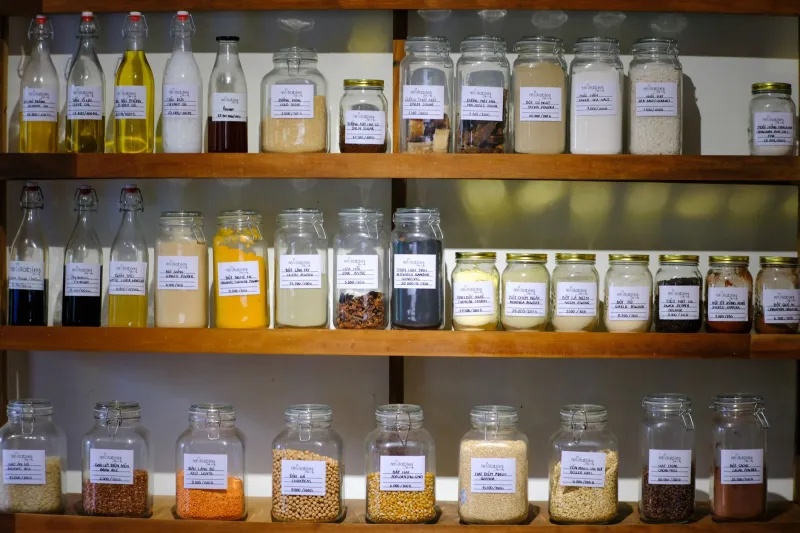
Walk down any major grocery store aisle these days and you'll notice something kind of depressing. Row after row of brightly labeled bottles, jars, and packets — all promising bold flavor, rich taste, or "homemade" quality. But crack one open at home, and too often you're met with something watery, synthetic, or just... flat.
A growing number of American home cooks have hit their limit with that disconnect. And they're doing something about it.
Over the past few years, there's been a quiet but real movement away from conventional supermarket staples toward concentrated alternatives — products that pack more actual flavor into smaller volumes, skip the filler ingredients, and deliver something that tastes like it came from a real kitchen rather than a processing plant. It's not a trend driven by food influencers or celebrity chefs. This one's coming straight from people who cook dinner every night and got tired of feeling let down.
The Tipping Point Nobody Talked About
For many home cooks, the shift started with a single moment of clarity. Maybe it was opening a jar of store-brand vanilla extract and realizing it smelled more like rubbing alcohol than anything close to a vanilla bean. Or buying a bottle of "concentrated" lemon juice that somehow tasted less lemony than actual water.
Maria, a home cook in Austin, Texas, describes her turning point pretty simply: "I made the same pound cake I'd been making for fifteen years, and it just didn't taste right anymore. I hadn't changed anything. But I think my standards had changed."
That's a sentiment that shows up again and again when you talk to home cooks who've made the switch. It's not that mass-market products suddenly got worse — it's that people started paying closer attention to what they were actually buying, and the gap between the label and the reality became impossible to ignore.
Food transparency has a lot to do with it. As more consumers started reading ingredient lists (thanks in no small part to pandemic-era cooking curiosity), they started asking uncomfortable questions. Why does this vanilla extract contain corn syrup? Why does this broth have seventeen ingredients when homemade broth has four? Why does "natural flavor" appear on everything without explanation?
What Concentrates Actually Bring to the Table
Concentrated products aren't new. Chefs have been reaching for high-quality extracts, reductions, and concentrated bases for decades. What's changed is that home cooks are catching on — and the market has responded with better, more accessible options.
At their core, concentrates work by removing water and filler to leave behind the most potent version of a flavor or ingredient. A good vanilla paste, for example, delivers actual vanilla bean specks and a flavor depth that most liquid extracts simply can't match. A quality tomato concentrate brings an umami richness that canned diced tomatoes diluted in their own juice just won't give you.
Nutritionist and food writer Dana Kellerman, based in Chicago, points out that concentrates often come with a cleaner ingredient story, too. "When you're working with a quality concentrate, you're typically dealing with fewer additives, less sodium in many cases, and a shorter ingredient list overall," she says. "You're paying for the actual ingredient, not for water and stabilizers."
That's a meaningful shift in how people think about value. A two-ounce bottle of high-quality almond extract costs more upfront than a cheap store brand — but when you're using a fraction of the amount to get twice the flavor, the math starts looking pretty different.
The Flavor-Per-Dollar Argument
One of the most compelling things driving this movement is pure economics, once home cooks actually sit down and run the numbers.
Take beef broth as an example. A standard 32-ounce carton of grocery store broth runs anywhere from $3 to $5 and delivers a mild, often watery flavor that disappears into a dish. A quality concentrated beef base, by contrast, might cost $8 to $10 — but yields the equivalent of 20 or more cups of broth, with a significantly deeper flavor profile. Do the math and the concentrated version is often cheaper per serving and better tasting.
James, a home cook in Portland who documents his cooking on a small personal blog, made this discovery about eighteen months ago. "I was skeptical at first because the sticker price was higher," he admits. "But I started tracking what I was actually spending versus what I was getting. The concentrates won every time once I factored in flavor and yield."
This kind of value reframe is happening across product categories — from citrus extracts to mushroom powders to herb pastes. People are learning that concentrated doesn't mean expensive. It means efficient.
Ingredient Quality Is the New Status Symbol
There's also a cultural dimension to this shift that's worth acknowledging. For a certain generation of American home cooks, buying the store brand was a point of practical pride. Frugality was the goal.
But something has changed in how people think about their pantries. Ingredient quality — knowing where something came from, understanding how it was made, trusting what's in it — has become its own kind of status. Not in a showy way, but in a quietly intentional one.
Concentrates fit neatly into that mindset. They reward the cook who pays attention. They respond to care and precision. And they tend to come from producers who are willing to explain exactly what went into the bottle, because the product can stand up to scrutiny.
"I want to know what I'm cooking with," says Maria from Austin. "A short ingredient list with things I recognize is worth more to me now than a big brand name."
The Learning Curve Is Real (But Short)
It would be dishonest to pretend there's zero adjustment involved. Working with concentrates does require a bit of recalibration. You use less. You taste as you go. You learn to trust your palate rather than just following a recipe's volume measurements.
But most home cooks who've made the switch describe the learning curve as surprisingly short. A few experiments, a few adjustments, and the new approach starts to feel completely natural.
The payoff — food that actually tastes like what it's supposed to taste like — tends to make the adjustment feel more than worth it.
What This Means for the American Pantry
The shift toward concentrates isn't just about individual buying decisions. It's a signal that American home cooks are getting more serious, more discerning, and more willing to invest a little extra thought into what fills their shelves.
Mass-market staples built their empires on convenience and consistency. Those things still matter. But flavor — real, honest, recognizable flavor — is back on the list of non-negotiables.
And once you stock your pantry with ingredients that actually deliver on that front, it's pretty hard to go back to the watered-down version of anything.