Less in the Jar, More on the Plate: How Concentrates Are Teaching Cooks the Art of Restraint
There's a particular kind of cooking confidence that comes from dumping half a bottle of something into a pot and calling it bold. We've all been there. The extra glug of soy sauce. The third heaping spoonful of spice blend. The generous pour that turns a delicate broth into something you'd need a glass of water to finish. For a long time, that instinct felt like ambition. Turns out, it was mostly habit.
Across American home kitchens, something is shifting. Cooks who've started working with high-quality concentrates — whether that's a dense tomato paste, a potent vanilla extract, or a tightly reduced stock base — are reporting the same unexpected side effect: they're getting better at cooking overall. Not because concentrates are magic, but because they demand something most of us were never really trained to offer. Intention.
Where the 'More is Better' Myth Came From
It didn't appear out of nowhere. Food marketing spent decades conditioning American consumers to associate volume with value. Bigger bottles. Bolder claims. "Packed with flavor" printed across containers of products that were, in reality, packed with fillers, water, and sodium. When the actual flavor concentration is low, you need more product to taste anything at all. So you pour more. And more. And more.
Grocery store seasoning packets, pre-made sauces, and mass-market extracts are often formulated around this cycle. They're designed to be used generously because generous use drives repurchase. There's nothing conspiratorial about it — it's just business. But the downstream effect on how Americans cook has been real and lasting. We learned to eyeball quantities upward, not downward. We learned to distrust restraint.
And then some of us started cooking with concentrates that actually meant it.
What Happens When the Ingredient Is Actually Strong
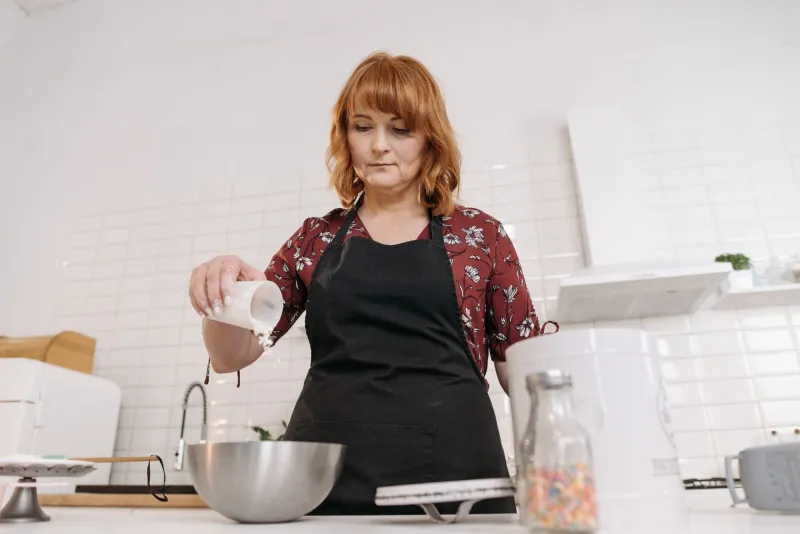
The first time you add a quarter teaspoon of a genuine, quality-sourced vanilla paste to a custard and realize it's enough — more than enough — something clicks. It's not a subtle shift. It's almost disorienting. You were braced to add more, and you don't need to. The flavor is already there, doing exactly what you needed it to do, without you pushing.
This is the moment cooks describe as the turning point. Not a recipe. Not a class. Just a single ingredient that behaved differently than expected because it was genuinely concentrated rather than just labeled that way.
From there, the recalibration tends to spread. If less vanilla works, what about that mushroom powder? What about the fish sauce? The miso paste? Suddenly the whole kitchen becomes a place for asking different questions — not "how much do I add?" but "how much do I actually need?"
The Psychology of Letting Go of More
Food psychologists have noted for years that Americans tend to conflate quantity with quality in ways that don't always hold up. We tip toward the larger portion. We trust the heavier bottle. We read a longer ingredient list as somehow more sophisticated. These aren't character flaws — they're deeply ingrained patterns reinforced by years of marketing and product design.
Breaking them takes a concrete reason. And for a lot of home cooks, that reason turns out to be economic as much as culinary. Premium concentrates cost more per unit. That's just reality. But they also go significantly further, and when you've paid real money for a small jar of something excellent, you pay attention. You measure. You taste as you go. You stop before you overshoot.
That careful, attentive approach — born partly from not wanting to waste a pricey ingredient — turns out to be exactly how professional cooks work. It's not a personality trait. It's a practice. And concentrates, almost accidentally, teach it.
Restraint Isn't the Same as Timidity
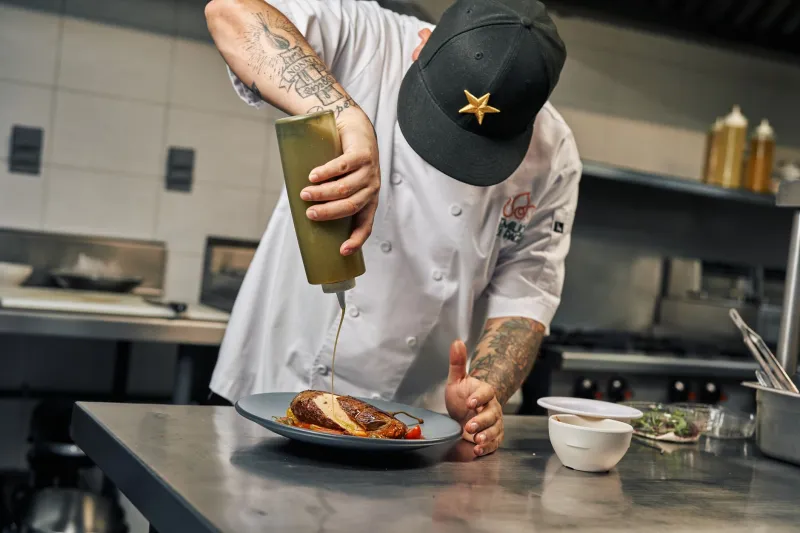
This is worth saying plainly, because the word "restraint" can sound like it means playing it safe. It doesn't. Some of the most intensely flavored dishes you'll ever eat come from cooks who used very little of a very powerful ingredient, placed with precision. A smear of anchovy paste in the base of a braise. A few drops of smoked concentrate in a cocktail. A single tablespoon of a properly reduced demi-glace stirred into a pan sauce.
These aren't timid moves. They're confident ones. The confidence just looks different — quieter, more deliberate — than the confidence of pouring freely from a large bottle of something diluted.
The shift from one kind of confidence to the other is exactly what a lot of home cooks are describing right now. And most of them didn't get there through a cooking class or a cookbook. They got there by running out of something expensive and realizing the dish was still great.
What This Means for How You Stock Your Kitchen
If you're rethinking your pantry through this lens, the practical implication isn't to throw everything out and start over. It's more about asking better questions before you buy. Does this product tell you where the flavor actually comes from? Does the label give you any sense of concentration level, or does it just say "natural flavors" and leave you guessing? Is there a suggested usage rate, or is the implicit message to just keep adding until it tastes like something?
Products built around genuine concentration tend to be more transparent about those things. They tell you a little goes a long way because it actually does, and because a company confident in its product wants you to use it correctly rather than burn through it.
That transparency — about sourcing, about potency, about usage — is one of the clearest signals that you're dealing with something real. And something real, used thoughtfully, is almost always more satisfying than something mediocre used in abundance.
The myth that more equals better had a good run. But in kitchens where the ingredients actually deliver, it's quietly losing ground. One careful half-teaspoon at a time.